

 See My Latest Article on HelloNation

Back pain can feel dull, sharp, burning, stiff, or electric. The location and behavior of the pain often provide useful clues, but symptoms alone cannot confirm a diagnosis. In Dallas, TX, everyday factors such as long commutes, desk work, home projects, exercise, and prolonged indoor sitting can all contribute to back discomfort.
What are the main types of back pain?
Back pain is commonly described by its location, duration, and the tissues or nerves involved. The most useful distinctions are mechanical pain, nerve-related pain, inflammatory pain, and pain referred from another part of the body.
Pain may also be classified by duration:
- Acute pain: Begins suddenly and generally lasts less than several weeks.
- Subacute pain: Continues beyond the initial episode but has not become long-term.
- Chronic pain: Persists for three months or longer, either continuously or in recurring episodes.
These categories can overlap. For example, a strained muscle may cause acute mechanical pain, while a disc problem may cause both local back pain and nerve symptoms in a leg.
What does muscle or ligament strain feel like?
A strain is one of the most common causes of sudden back pain. It can happen after lifting, reaching, twisting, exercising, moving furniture, or spending unusual amounts of time in one position.
Typical symptoms include:
- Aching or tightness across the lower back
- Pain that increases with bending, standing, or changing position
- Muscle spasms or protective stiffness
- Tenderness in a specific area
- Pain that stays in the back rather than traveling down the leg
A strain often improves gradually with relative activity, gentle movement, and time. Complete bed rest is usually unhelpful and may increase stiffness. Short periods of reduced activity can be reasonable, but routine walking and comfortable movement are generally preferable when tolerated.
Heat may feel soothing for stiffness or muscle spasm. Cold can help some people during the first day or two after a minor injury. Medication decisions should account for age, kidney health, stomach problems, blood pressure, pregnancy, and other medical conditions.
How is nerve-related back pain different?
Nerve-related pain often travels from the lower back into the buttock, thigh, calf, or foot. It may result from irritation or compression near a spinal nerve and is sometimes called radicular pain or sciatica.
People may describe it as:
- Burning, shooting, or electric
- Tingling or pins and needles
- Numbness
- Weakness in part of the leg or foot
- Pain that worsens with coughing, sneezing, or prolonged sitting
Nerve symptoms do not always mean that surgery is needed. Many cases improve with time and carefully selected movement, strengthening, medication, or rehabilitation. However, new or worsening weakness deserves prompt medical evaluation.
A useful distinction is that ordinary soreness tends to remain near the back, while nerve pain usually follows a recognizable path into the leg. The two can occur together.
What symptoms suggest a disc problem?
Spinal discs act as cushions between the vertebrae. A disc can bulge, tear, or lose height over time. Some disc changes cause no symptoms, while others irritate nearby nerves.
Disc-related symptoms may include back pain, leg pain, numbness, tingling, or weakness. Symptoms can worsen with sitting, lifting, bending, or certain spinal positions, although the pattern varies.
A disc finding on an imaging report is not automatically the cause of pain. Disc changes are common, particularly with age, and must be considered alongside the person’s symptoms and physical examination. Imaging is not always needed during the first phase of uncomplicated back pain.
Could arthritis or spinal narrowing cause back pain?
Arthritis-related changes can affect the small joints of the spine and may produce stiffness, aching, and reduced mobility. Symptoms often become more noticeable after inactivity or repetitive loading.
Spinal narrowing, sometimes called spinal stenosis, can place pressure on nerves. A common pattern is discomfort, heaviness, numbness, or weakness in the buttocks and legs while standing or walking. Some people feel better when sitting or leaning forward.
These conditions are more common with aging, but age alone does not determine how severe symptoms will be. Regular movement, leg and trunk strengthening, weight management when appropriate, and a tailored rehabilitation plan may help maintain function.
What causes upper-back or middle-back pain?
Pain in the middle or upper back may come from muscles, joints, ribs, posture, or the neck. Long periods at a computer, driving, carrying children, and repetitive household work can overload the muscles between the shoulder blades.
Common sensations include:
- Aching between the shoulder blades
- Stiffness when rotating or reaching
- Pain after prolonged sitting
- Tenderness along the ribs or upper spine
- Muscle fatigue after lifting or carrying
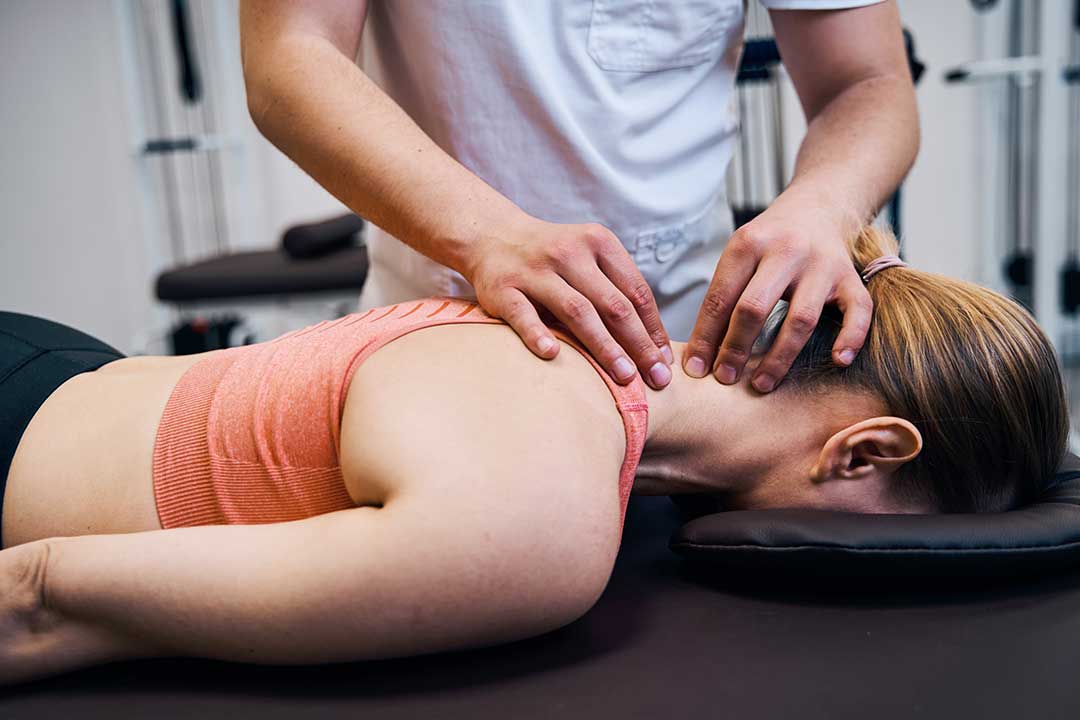
Upper-back pain should not always be assumed to be a posture problem. Pain associated with shortness of breath, chest pressure, sweating, nausea, faintness, or unusual weakness requires urgent medical attention.
What about inflammatory or referred pain?
Inflammatory back pain tends to behave differently from a simple strain. It may begin gradually, cause prolonged morning stiffness, improve somewhat with movement, and worsen during rest or overnight. Recurrent symptoms involving other joints, eye inflammation, skin changes, bowel symptoms, or a family history of inflammatory disease warrant medical assessment.
Back pain can also be referred from outside the spine. Kidney problems, abdominal conditions, pelvic disorders, osteoporosis-related fractures, infection, and other illnesses can sometimes produce pain in the back. Burning urination, blood in the urine, fever, unexplained weight loss, or severe abdominal symptoms should not be treated as ordinary muscle soreness.
What can help during a typical episode?
For uncomplicated back pain, practical steps may include:
- Keep moving within comfortable limits rather than remaining in bed.
- Break up long periods of sitting with brief walks or position changes.
- Use a supportive, neutral posture without trying to hold the spine rigidly.
- Resume light daily activity gradually.
- Use heat or cold based on which provides more relief.
- Avoid repeatedly testing the painful movement.
- Return to lifting and exercise in stages instead of all at once.
Dallas households may also need to account for seasonal heat, long periods indoors, and activity changes during unusually hot weather. Dehydration, reduced activity, and sudden increases in weekend yardwork or exercise can all make stiffness more noticeable.
When should back pain be evaluated urgently?
Immediate medical attention is appropriate for back pain accompanied by:
- New loss of bladder or bowel control
- Numbness around the inner thighs, buttocks, or genital area
- Significant or worsening leg weakness
- Inability to walk normally
- Fever or signs of infection
- Unexplained weight loss
- Severe pain after a fall or collision
- Pain that is rapidly worsening or unrelenting
- A history of cancer, major osteoporosis, or prolonged steroid use
Less urgent evaluation is sensible when pain repeatedly returns, travels below the knee, disrupts sleep, limits normal activity, or fails to improve over several weeks. A careful history and physical examination can help determine whether the problem appears mechanical, nerve-related, inflammatory, or potentially connected to another condition.
The goal is not simply to label pain, but to understand its pattern, protect against warning signs, and choose activity and treatment that fit the underlying problem.